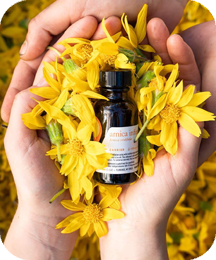
Arnica is one of the most researchable ingredients highlighted in Balmorex. This page focuses on what Arnica studies actually show—and why those results cannot automatically be transferred to a different multi-ingredient cream.
What the Research Landscape Looks Like
A 2024 systematic review identified 42 eligible papers involving phytotherapeutic and homeopathic Arnica formulations across traumatic injuries and inflammatory conditions. The studies were heterogeneous, so a single universal conclusion about every Arnica product would be too strong.
Topical Human Evidence
A randomized double-blind study in hand osteoarthritis compared a specific Arnica gel with 5% ibuprofen gel and found no significant differences between groups within that study. Other trials in different contexts have produced mixed findings.
Why the Formulation Matters
Different Arnica preparations can vary in extraction, concentration, base and application schedule. Evidence from one formulation is most directly evidence for the formulation actually studied.
Safety
Arnica can cause contact allergy or dermatitis in susceptible individuals. Published patch-testing and case reports provide safety context, but they do not establish the incidence of reactions to Balmorex.
What Arnica Evidence Means for Balmorex
Arnica research strengthens the claim that Arnica is a scientifically researchable ingredient. It does not establish that the complete Balmorex formula produces the same outcomes as a specific Arnica study.
Learn how we judge evidence transfer →
Sources & References
We prioritize primary product information, regulatory sources, peer-reviewed research and recognized clinical guidance. Seller claims are not treated as independent clinical evidence.
Related Research
Editorial owner: Balmorex Reviews Editorial Team · Last reviewed: August 28, 2026